
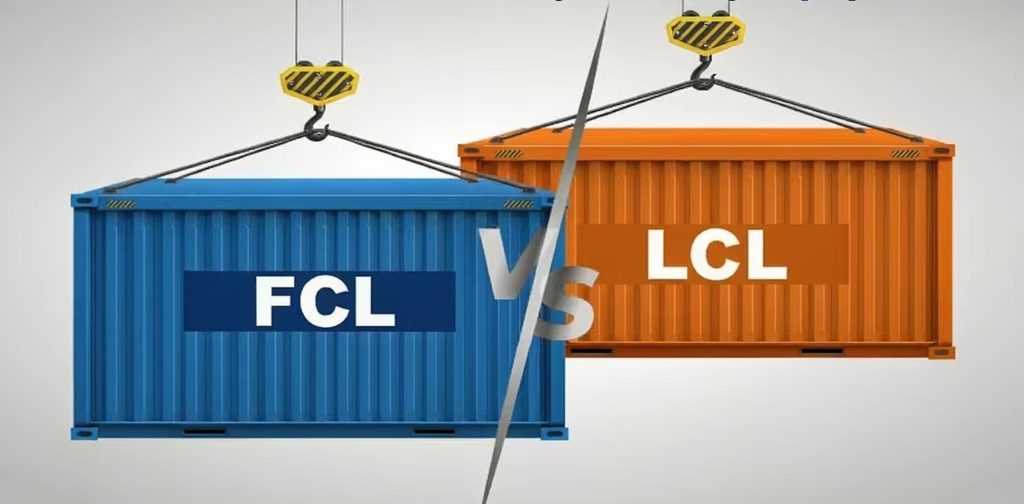
What LCL and FCL mean for machinery shipments
When you source industrial equipment from Chinese factories, the first booking decision is whether your goods move as LCL or FCL. LCL (less than container load) consolidates your machinery with other importers’ cargo inside one shared container, while FCL (full container load) gives you a sealed box reserved for your shipment alone. Both modes run through our container options for standard and special boxes, but the cost math differs sharply once weight and volume enter the picture.
Heavy and oversized equipment rarely behaves like apparel or small parts. A single CNC module, a compressor, or a welded frame can push a shipment into out-of-gauge territory, where the standard LCL versus FCL choice overlaps with flat rack and open top solutions. Our machinery shipping team plans each booking around the actual dimensions, not a generic rule.
The break-even point by weight and volume
The simplest way to compare the two modes is a chargeable-volume test. LCL is priced per cubic meter (CBM) and per chargeable weight, so it wins on small, light loads. FCL carries a flat box rate regardless of how full the container is, so it pulls ahead once you fill roughly half a container. The table below shows the practical split for typical machinery.
| Factor | LCL machinery | FCL machinery |
|---|---|---|
| Best volume range | Under 10 CBM | 10 to 30+ CBM |
| Weight handling | Priced on chargeable weight, heavy pieces add cost | Flat rate, very heavy loads spread the cost |
| Cost structure | Per CBM plus handling and documentation fees | Flat box rate plus port and delivery charges |
| Transit time | Estimate, subject to quote, consolidation adds days | Estimate, subject to quote, direct sailings |
| Handling risk | More touches during consolidation | Fewer touches, sealed at origin |
| Best for | Spare parts, single light machines, samples | Full lines, multiple crated units, project loads |
As a working rule, a single machine under about 8 to 10 CBM usually costs less as LCL, while multiple crated units or a line that fills half a 20-foot or 40-foot box land cheaper as FCL. These are estimates, subject to quote, because commodity density and crating change the numbers.
Cost drivers beyond the box
The container rate is only part of the bill. Crating, cargo securing, and out-of-gauge surcharges can dominate the total for machinery. Our cargo quoting method breaks the estimate into measurable pieces so you can see where the money goes. Weight density matters: a dense steel press may be light on volume but heavy on chargeable weight under LCL rules.
Destination handling also shifts the math. FCL lets you control the unpack and delivery window, while LCL cargo is deconsolidated at a hub before final delivery. For buyers comparing landed cost, our shipping cost hub explains the line items that appear on a machinery quote.
When LCL makes sense for machinery
Choose LCL when you are moving a few components, replacing a broken unit, or testing a new supplier without committing to a full container. It lowers the cash tied up in inventory and works well for parts that fit standard dimensions. Many first orders from a heavy machinery shipment start as LCL while volume builds.
When FCL or a special box wins
Once the load reaches half a container, or the equipment is too tall, too wide, or too heavy for a standard door, FCL plus a special box becomes the better path. Open top and flat rack containers handle machinery that cannot enter through a standard door, and breakbulk covers loads that exceed any box. Our machinery clearance checklist covers the documents you need before either mode sails.
How to brief your forwarder
Send the commercial invoice, packing list, HS or HTS code, and dimension drawings for any out-of-gauge piece. Classification under the Harmonized Tariff Schedule drives duty and paperwork, so accuracy at this stage prevents delays. With those details in hand, your forwarder can recommend LCL, FCL, or a special box with confidence.
Frequently asked questions
Is LCL cheaper than FCL for a single machine?
When one machine is under roughly 8 to 10 CBM, LCL is usually cheaper because you pay only for the space your cargo uses. Once the unit and its crate approach half a container, the flat FCL rate typically wins. Treat any figure as an estimate, subject to quote, because crating and density shift the result.
Can oversized machinery move as LCL?
Only if it fits the consolidator’s standard dimensions and weight limits. Tall, wide, or very heavy equipment usually needs FCL with a flat rack or open top, or full breakbulk handling. A pre-shipment dimension check prevents costly rebooking at the port and keeps your delivery schedule intact.
How is LCL machinery priced?
LCL uses chargeable volume, the greater of actual cubic meters and weight converted to volume. Handling, documentation, and destination deconsolidation fees stack on top of the freight. Our quoting page lists each component so the estimate stays transparent, rather than arriving as a single unexplained number you cannot check.
Does FCL reduce damage risk for equipment?
Yes, in most cases. A sealed FCL box is stuffed and locked at origin, so the machine is touched fewer times than in shared LCL consolidation. Proper crating and lashing still matter, especially for precision or shock-sensitive units, but the sealed environment lowers the chance of handling damage during the voyage.
What documents do I need before booking?
You need the commercial invoice, packing list, HS or HTS code, and dimensions or drawings for out-of-gauge pieces. Our clearance checklist walks through the full set, including any permit or certification the commodity requires at U.S. entry. Prep these early so the booking and customs steps do not stall.
Should I consolidate from multiple suppliers?
If several factories feed one shipment, consolidation in Guangzhou or Shenzhen can fill an FCL efficiently. That often beats sending separate LCL boxes and simplifies your final delivery. Ask for a multi-supplier plan when your volume is spread across vendors, since combined loads usually lower the total landed cost.
Written by the OOGSHIP Team.