Plan ocean freight for industrial machinery, molds and heavy equipment using packed dimensions, gross weight, loading requirements and the US delivery address.
Heavy machinery ocean freight
A machine can fit within a standard container yet require special handling because of concentrated weight or lifting requirements. Provide its packed dimensions, base footprint, center of gravity and lifting points so loading and unloading can be planned together.
Standard, open top or flat rack?
Standard containers suit equipment that fits through the door and meets loading requirements. Open top containers accommodate top loading or certain over-height machines. Flat racks can suit certain over-width, over-length and heavy loads. Larger indivisible equipment may require breakbulk planning.
Packing, lifting and cargo securing
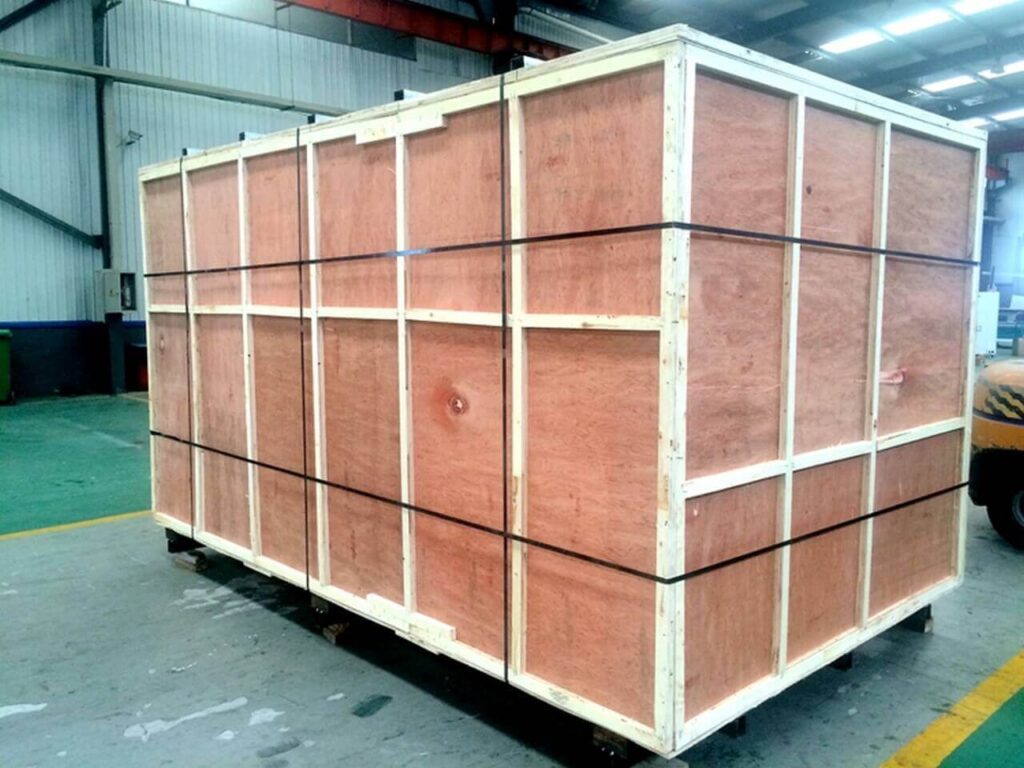
A machinery base should support the load during sea transport and repeated handling. Share drawings for fork pockets, lifting points and tie-down locations. Declare removable components, oils, batteries or pressure vessels when requesting a quote.
US heavy equipment delivery
Factory deliveries need compatible forklifts or cranes, a receiving contact and sufficient access space. Oversized road transport may also need route and permit planning. Include these requirements with the US ZIP code before booking the ocean leg.
Request a machinery shipping quote
Send cargo photos, technical drawings, packed dimensions, gross weight, origin location and destination address. Tell us whether the equipment will ship assembled or dismantled and when it will be ready.
Machinery shipping methods: standard, open top and flat rack
Machinery that fits a standard container through the door moves in a regular 20ft or 40ft box, subject to weight distribution and loading limits. Over-height equipment that fits the standard width is a candidate for an open top container, which allows crane loading from above. Over-width, over-length and very heavy loads are candidates for a flat rack, loaded from the top, side or end. Larger indivisible equipment may require breakbulk planning.
The right method depends on packed dimensions, gross weight, load distribution and carrier review of the route, not on the machine type alone. Final selection is confirmed after the cargo is measured and the route is checked.
Method
Best for
Loading
Standard container
Equipment fitting internal width and door height
Forklift and manual loading
Open top
Over-height equipment, standard width
Crane loading from above
Flat rack
Over-width, over-length, heavy loads
Top, side or end loading
Breakbulk
Indivisible pieces beyond container limits
Vessel deck or hold, project planning
What counts as out-of-gauge (OOG) cargo?
Cargo is treated as out-of-gauge when it exceeds a standard container’s internal width or door height, or when it cannot be loaded through the door. Typical examples are over-height machinery, over-length beams, over-width equipment and very heavy single pieces that need specialized containers, lifting and securing.
When requesting a quote, include every crate, base and protruding component in the packed measurements, plus the center of gravity and lifting points. Misstated dimensions are the most common cause of revised quotes and on-site delays.
Transit times and port options
Direct sailings from China to the US West Coast (Los Angeles, Long Beach, Oakland, Seattle) take about 12-16 days, and to the East Coast (New York, Savannah, Norfolk, Miami) about 25-30 days. Transshipment routes add roughly 6-8 days. Open top and flat rack cargo follow the same ocean schedules, subject to equipment availability, so booking space 2-3 weeks ahead is recommended.
For out-of-gauge equipment, confirm the discharge port’s terminal handling capability and the road feasibility for the inland leg, including any over-dimensional permits needed for US roads.
Packing, lifting and securing heavy equipment
A machinery base should support the load during sea transport and repeated handling. Share drawings for fork pockets, lifting points and tie-down locations, and declare removable components, oils, batteries or pressure vessels when requesting a quote. Blocking and lashing keep the load in place during the ocean leg and protect terminal handling.
If the equipment ships dismantled, provide the packed dimensions of each component so the container plan matches the actual cargo. Confirm whether the machine can be lifted by forklift, crane or both.
Export documents and US import clearance
Prepare the commercial invoice, packing list, bill of lading and ISF filing before the vessel departs. Confirm the HTS classification of the equipment for duty assessment and check whether the specific machine type has additional agency requirements, including conditions for used equipment.
Include equipment manuals and specification sheets in the documentation package where useful, so the US clearance file is complete before arrival.
Cost factors for machinery freight
Machinery quotes combine origin handling, ocean freight and US destination services. For special containers, extra slot space, lifting and securing charges apply. The destination side can include port handling, customs clearance, duties, container pickup, unloading, trucking and any over-dimensional road planning.
Compare quotes using the same packed dimensions, gross weight, origin, destination and delivery services so the rates are directly comparable.
FAQ
Can heavy machinery ship in a standard container?
Yes, when it fits the container’s internal width, door height and weight limits. Over-height or over-width equipment moves by open top or flat rack instead.
What is an open top container used for?
Open top containers carry over-height equipment that fits the standard width, loaded by crane from above after the top cover is removed.
What is a flat rack container used for?
Flat racks carry over-width, over-length and very heavy loads, loaded from the top, side or end, with terminal and road handling assessed per route.
What information do I need for a machinery quote?
Packed dimensions, gross weight, center of gravity, lifting points, photos or drawings, origin location and the US delivery ZIP code.
Are used machines treated differently at US customs?
Used equipment can carry additional conditions and documentation; confirm the requirements for your specific model before shipping.
How machinery shipping works step by step
Start with a quote and container plan: cargo type, packed dimensions, gross weight, center of gravity, lifting points and the US delivery ZIP code. The container type – standard, open top or flat rack – is confirmed after the cargo is measured and the route is reviewed.
At origin, the equipment is received, measured and prepared: crating or palletizing, lifting checks and securing. Share drawings and declare removable components, oils, batteries or pressure vessels before dispatch.
The export leg covers export documents and the ocean booking, with shipment updates along the way. The US leg covers import documents, customs clearance, container pickup, trucking and unloading, with route and permit checks for oversized loads.
Booking lead times and equipment availability
Open top and flat rack containers are less abundant than standard boxes, so booking space 2-3 weeks in advance is recommended, especially in peak season. Confirm the sailing schedule and equipment availability with the freight plan before the cargo is ready at the warehouse.
For breakbulk and project cargo, lead times can be longer because vessel space and port handling are arranged per project. Start the planning early when the equipment is indivisible or the delivery date is fixed.
Common machinery shipping pitfalls to avoid
The most common issues are inaccurate packed dimensions, misstated gross weight or center of gravity, forgotten removable components, and undeclared oils, batteries or pressure vessels. Each of these can trigger a revised quote or an on-site delay.
Measure every crate, base and protruding part, weigh the cargo at the warehouse, and provide photos or drawings with the quote request. A complete cargo file at the start keeps the schedule and the cost predictable.
Equipment types commonly shipped from China
Industrial equipment commonly moved on this route includes CNC machines and machining centers, injection molding machines, presses, generators, pumps, compressors, packaging lines, robotics and molds. Each type has different weight distribution, lifting points and securing needs, which is why the quote is built on the actual packed dimensions and drawings rather than a category.
Whether the equipment ships assembled or dismantled changes the container plan. Assembled machines need lifting and tie-down planning around the base and center of gravity; dismantled machines move as multiple packed components with a matching packing list.