
What US customs clearance from China involves
US customs clearance from China is the process of getting your ocean shipment legally admitted into the United States by U.S. Customs and Border Protection (CBP). Every commercial container that leaves a Chinese port and arrives at a US port must be cleared before the cargo can be released to the consignee. Clearance spans document submission, duty payment, and possible cargo examination that happens before the container leaves the terminal.
For most ocean freight, a licensed customs broker files the entry on the importer’s behalf. The broker submits the entry summary, confirms the HTS classification, and pays estimated duties and fees through CBP’s automated systems. Furniture importers moving consolidated LCL loads and machinery buyers shipping heavy equipment follow the same core steps, though the documents and tariff treatment differ by commodity.
The clearance timeline
Clearance work begins before the vessel reaches the United States. The Importer Security Filing must be transmitted to CBP no later than 24 hours before the cargo is laden aboard the vessel at the foreign port. A complete ISF filing reduces the risk of holds and liquidated damages.
At arrival, the carrier notifies CBP and the broker files the formal entry. CBP runs automated risk checks. If nothing flags, the shipment is released after duty payment. If CBP selects the container for exam, release waits until the exam clears. Most routine entries clear within roughly two to four business days, but exam backlogs at busy ports can stretch that window.
Documents you need for clearance
Prepare the core set early so your broker can file without delay.
Commercial invoice and packing list
The commercial invoice states the buyer, seller, product description, quantity, value, and country of origin. The packing list details carton or crate counts, dimensions, and weights. Both must agree with the bill of lading. Discrepancies between declared value and the invoice are a common trigger for exams and valuation reviews.
Bill of lading and ISF
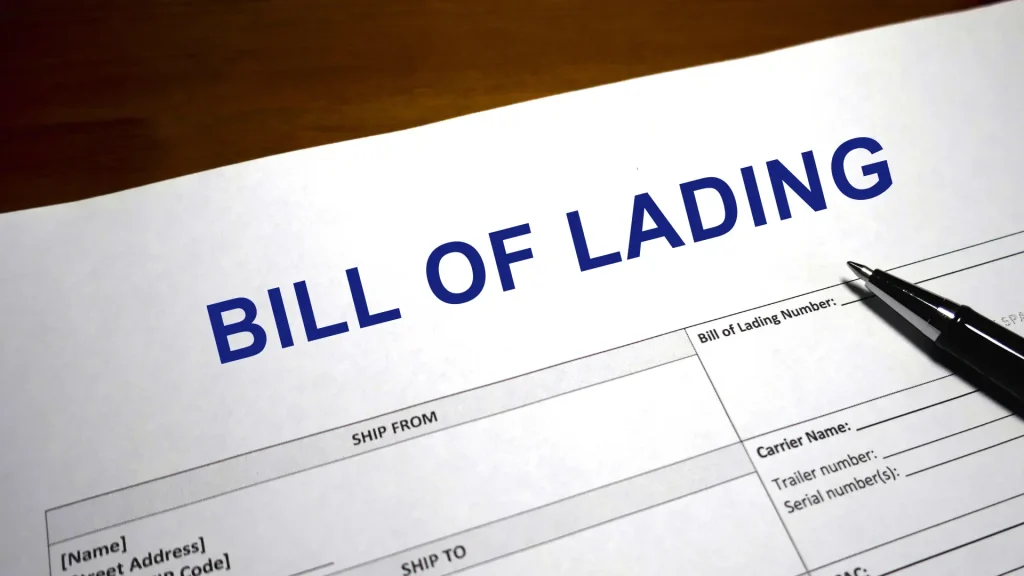
The bill of lading is your receipt of goods and the document of title. The ISF carries the 10+2 data set that CBP uses for risk assessment. Missing or late ISF data can lead to fines independent of the entry itself.
HTS classification and entry summary
Every product line needs a correct HTS code, which sets the duty rate and determines whether trade remedies apply. The entry summary reports the classification, value, and duty. Getting the code right protects you from penalties and unexpected tariff bills.
Common exam types
CBP uses several exam levels. A meter reading or non-intrusive exam (often via X-ray) checks the container without opening it. A tailgate exam opens the container doors for a visual check. An intensive exam moves the cargo to a central examination station for full or partial unpacking. Wood packaging and mismatched descriptions raise the odds of a deeper exam.
Why shipments get held
Holds usually trace to a short list of causes. Incomplete or inaccurate ISF data, wrong HTS codes, undervalued goods, missing wood packaging marks, and unpaid duties lead the list. Section 301 tariffs and anti-dumping orders on certain furniture lines add another layer of review. The best defense is accurate paperwork filed early, plus a broker who pre-checks classification against current requirements.
Cargo specific clearance notes
Furniture often draws extra scrutiny because of Section 301 tariffs and anti-dumping cases on specific product categories. Review the furniture customs path before booking. Machinery and heavy equipment may need EPA or equipment specific documentation. Use the machinery clearance checklist to prep those entries. In both cases, confirm the HTS code and any trade remedy coverage before the vessel sails.
Clearance fees and your landed cost
Beyond duties, budget for the broker fee, the Merchandise Processing Fee, the Harbor Maintenance Fee, and any exam or storage charges if the container is held. These sit on top of freight and insurance. Review the full landed cost picture before you quote a customer or set a retail price, because clearance fees change the math on thin margin goods.
Working with a licensed forwarder
OOGSHIP operates as an NVOCC and FMC licensed freight forwarder. A licensed forwarder coordinates the broker, pre-files the ISF, and tracks the entry through release. For oversized and heavy cargo that does not fit a standard box, clearance planning should start at the booking stage, not after arrival. A forwarder familiar with out of gauge cargo helps avoid the surprises that turn into storage fees.
Frequently asked questions
How long does US customs clearance from China take?
Most standard ocean entries clear within roughly two to four business days after the vessel arrives, provided the paperwork is complete and duties are paid. If CBP selects the container for a physical or X-ray exam, release can take one to two weeks depending on port backlog. Filing the ISF early reduces delay risk.
Who files customs clearance, the importer or the forwarder?
The importer of record is legally responsible for the entry, but most importers use a licensed customs broker to file it. Your freight forwarder typically coordinates the broker and supplies the shipment data. OOGSHIP works with licensed brokers so the entry, ISF, and duty payment move together instead of in separate, conflicting steps.
What happens if the ISF is filed late or wrong?
CBP may assess liquidated damages of up to $5,000 per violation for a late or inaccurate Importer Security Filing, and may also hold the cargo. The filing must reach CBP at least 24 hours before lading at the foreign port. Accurate, early ISF transmission is the cheapest insurance against arrival day problems.
Do I pay duties on every shipment from China?
Most commercial shipments are dutiable, but the rate depends on the HTS code and any trade remedies in force. Some products enter at a low or zero Most Favored Nation rate, while others carry Section 301 tariffs on top. Your broker determines the exact duty using the classification and the country of origin shown on the invoice.
Can clearance be done before the ship arrives?
The ISF and much of the entry data can be prepared before arrival, and many brokers submit a pre-entry. Final release still waits until the vessel arrives and CBP completes its risk checks. Pre-filing shortens the wait because the broker only finalizes duty payment at arrival instead of building the whole entry from scratch.