
Open Top & Flat Rack Shipping from China to New York
Open top and flat rack shipping from China to New York connects East Coast importers to the same out-of-gauge capacity as West Coast services, on a longer ocean leg. New York / New Jersey is the largest East Coast container gateway, with regular direct services from China, and its terminals handle specialized containers for oversized […]
Read article →
Open Top & Flat Rack Shipping from China to Los Angeles
Open top and flat rack shipping from China to Los Angeles is the standard West Coast route for over-gauge equipment. LA and Long Beach form the largest US container gateway, with frequent direct sailings from China, and the port’s crane and terminal infrastructure handles open top and flat rack cargo well. Direct ocean transit runs […]
Read article →
Machinery Export from China & US Import Clearance: Documents Checklist
Most machinery sits at the US port because the paperwork is incomplete, not because the equipment is hard to clear. Preparing machinery import clearance starts before the cargo leaves China: the ISF filing, accurate invoice values, the equipment classification and the export documents from the supplier all feed the US clearance file. Export documents from […]
Read article →
How Out-of-Gauge (OOG) Cargo Is Quoted: Dimensions, Weight & Center of Gravity
An out-of-gauge (OOG) cargo quote from China to the USA is built from packed dimensions, gross weight and load characteristics — not from volume alone. Over-gauge space, lifting and securing are priced separately, so the accuracy of your measurements decides how close the quote comes to the final charge. What drives the OOG quote Why […]
Read article →
Shipping Heavy Machinery from China to USA: Methods, Costs & Compliance
Shipping heavy machinery from China to the USA is a dimension, weight and loading exercise before it is a freight booking. Standard containers carry equipment that fits the box; open top and flat rack containers handle over-height, over-width and heavy pieces. The right method depends on packed dimensions, gross weight and how the cargo is […]
Read article →
DDP vs DAP for Furniture Imports from China
Choosing DDP vs DAP for furniture from China decides who clears US customs, who pays the duty, and who is responsible for the final delivery. It is not an abstract Incoterms debate — it decides what number you are actually comparing when a forwarder quotes you a “delivered” price, and it decides who carries the […]
Read article →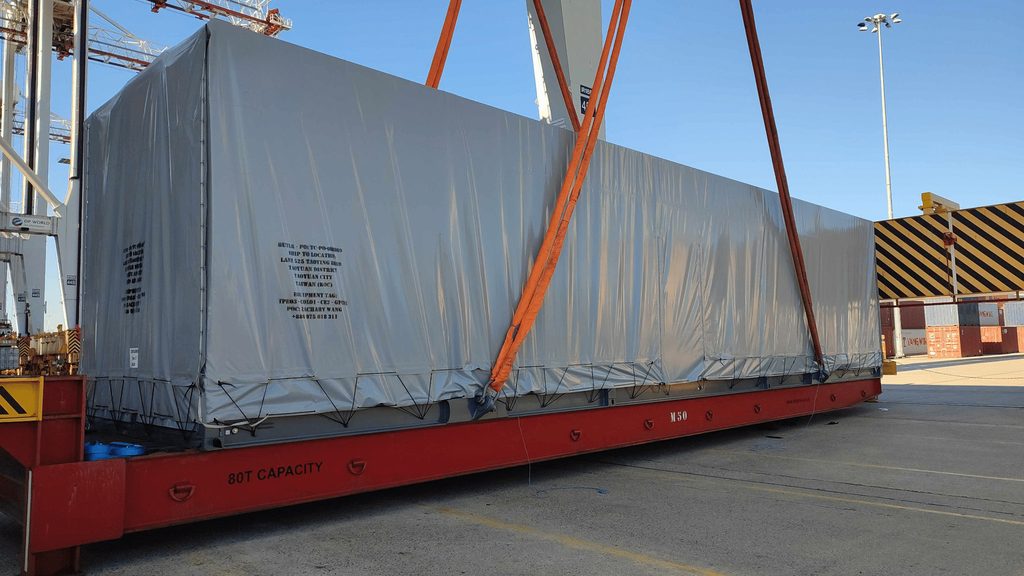
Open Top vs Flat Rack: Choosing the Right Container for Out-of-Gauge Cargo
Choosing between open top and flat rack containers for out-of-gauge cargo from China to the USA starts with the single dimension that exceeds the standard box. Over-height equipment that fits the standard width points to an open top; over-length, over-width or very heavy loads point to a flat rack. What counts as out-of-gauge (OOG) cargo […]
Read article →
China to USA Furniture Customs: Duties, ISF & Documentation Checklist
Most furniture shipments from China get held up at the US port for paperwork, not for the cargo itself. Getting four things right before the vessel sails — the ISF filing, accurate invoice values, the HTS classification for duties, and ISPM-15 compliance on wooden packing — is what keeps a container moving through clearance without […]
Read article →
Furniture Shipping to US West Coast vs East Coast: Transit Times & Costs
Planning furniture shipping to the US starts with a simple question: which coast. Whether the load moves LCL or FCL affects the volume you compare, but the coast choice changes transit time and the whole destination cost structure. West Coast gateways like Los Angeles and Long Beach sit closest to Asia; East Coast ports such […]
Read article →
LCL vs FCL for Furniture: When Does a Full Container Make Sense
Furniture is a volume game, so the LCL vs FCL decision on a China-to-USA shipment comes down to how much space your cargo actually occupies. Sofas, dining sets and bedroom suites are bulky, and the way they pack — knocked down or fully assembled, stackable or not — shifts the numbers far more than the […]
Read article →