Key takeaways
- Machinery shipping cost from China to USA hinges on weight, crate size, and equipment type.
- Under 1,000 kg may consolidate as LCL, but crated machines are non-stackable and draw surcharges.
- Align 20ft FCL near $4,800 to $5,800 and 40ft HQ near $6,500 to $7,800 with the site benchmark.
- Flat rack and open top run $8,500 to $15,000+ once lost-slot and lashing fees apply.
- DDP under Incoterms 2020 must cover US clearance and duties; confirm the Incoterm in writing.
- Engine-powered machines need EPA papers whether new or used; standard US liftgates stop near 2,500 lbs.
A machine quote is more than an ocean rate. Weight, crate size, equipment type, and US destination all reshape the final number. The sections below explain what drives machinery shipping cost and where surprise charges appear.
Each year, OOGSHIP moves machining centers, presses, generators, and pumps across the Pacific. The same cost drivers appear on every booking. Start with the machinery shipping options to match a service to your load.
What drives machinery shipping cost from China to USA?
An industrial machine is heavy, and many units exceed standard container dimensions. That combination sets machinery shipping cost more than distance alone. A compact pump may move as LCL. A hydraulic press usually needs a flat rack or breakbulk booking.
Send exact weight, crate dimensions, and a clear drawing before you request a rate. Forwarders quote the right equipment only from those details. Guessed dimensions lead to repacking fees at the port.
How much does LCL cost for small machinery?
Light machines under 1,000 kg and within standard dimensions can consolidate through LCL. Forwarders bill per chargeable volume or weight, known as W/M, whichever is greater.
Crated machinery is almost always non-stackable and dense. That profile can trigger non-stackable or heavy-piece surcharges. A carrier may price the space by the full column height, not by length times width times height.
Figures below are port-to-port ocean estimates from US West Coast base ports. They exclude crating, insurance, customs, and destination liftgate delivery.
| Chargeable Volume | Estimate Cost (USD, Port to Port) | Typical Load |
|---|---|---|
| 1 to 3 CBM | $450 to $950 | Small pumps, motors, spare parts |
| 3 to 6 CBM | $950 to $1,700 | Compact workshop machines |
| 6 to 10 CBM | $1,700 to $2,600 | Multiple crated units |
Learn how LCL pricing works before you compare a per-cbm rate with a flat surcharge.
What do FCL and flat rack machinery cost?
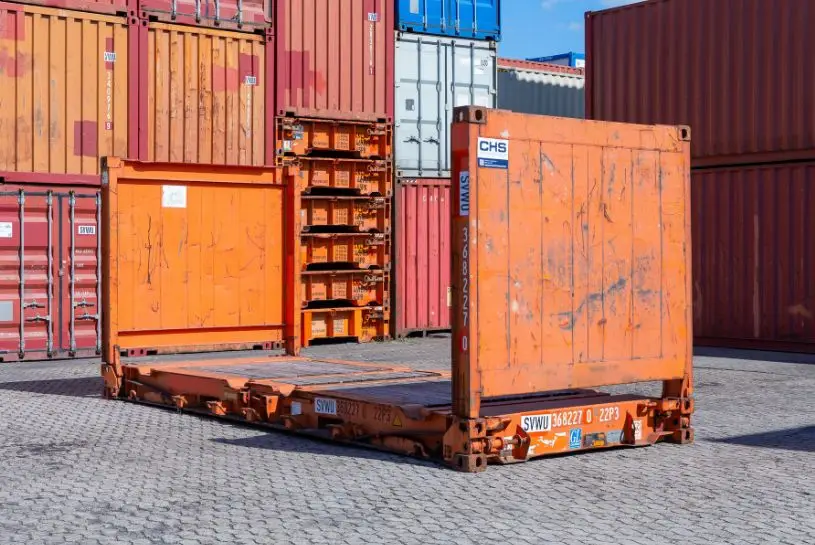
Standard machines that fit door height and payload limits move in FCL. Over-width, over-height, or crane-loaded units need flat rack or open top equipment.
The published 40ft benchmark sits near $7,111 to the West Coast and $9,387 to the East Coast. That SCFI anchor carries a 13 November 2026 date. The ranges below align with it.
Figures reflect typical China to US West Coast ocean ranges. East Coast runs higher. They exclude origin crating, permits, and US inland transport.
| Method | Estimate Ocean Cost (USD) | Typical Use |
|---|---|---|
| 20ft FCL | $4,800 to $5,800 | Dense, heavy machines; watch US road weight limits |
| 40ft FCL / HQ | $6,500 to $7,800 | Multiple machines or tall equipment, up to about 2.58m door height |
| Flat Rack / Open Top (OOG) | $8,500 to $15,000+ | Over-width, over-height, or crane-loaded machinery |
| Breakbulk | Custom project quote | Indivisible heavy industrial units |
Typical machinery ocean cost by method, USD, US West Coast, Nov 2026
Sources: SCFI benchmark, 13 Nov 2026; forwarder indications, Nov 2026. Special equipment costs two to three times a standard container. Verify at booking.
Why does out-of-gauge cargo cost more?
An out-of-gauge load carries layered charges beyond a standard container rate. Base ocean freight comes first. Then come special equipment surcharges and lost-slot fees.
Lost-slot fees apply when cargo overhangs the box sides or top. The carrier loses the ability to stack another unit above it. That space cost often rivals the ocean freight itself.
Port lashing and securing add another line. Terminal crane lifting adds more. US oversize and overweight road permits finish the list.
Review the container options page early. Choosing the wrong box type forces costly repacking at the port.
How do US destination fees change your landed cost?
Ocean freight is not the final bill. Heavy LCL machinery often arrives without a loading dock at the US facility. Standard liftgate trucks top out around 2,000 to 2,500 lbs, roughly 900 to 1,130 kg.
If your crated unit exceeds that weight or length, budget for a flatbed truck. You will also need a rented forklift or crane at delivery.
Confirm the receiver’s unloading equipment before the vessel sails. Missing that check creates storage and idle-detention charges on arrival.
Free time at the destination terminal is short. Demurrage and detention start once the clock runs out. Confirm those days in the quote before the vessel sails.
Which factors shift your machinery quotation?
Weight density changes the unit cost. A heavy machine may hit a payload limit before it fills the container. Crating for machinery protects precision parts and usually earns its cost.
LCL suits one or two small units. FCL wins once the chargeable volume passes roughly 15 to 20 CBM. Compare both formats before you commit to crating.
Classification and season also move the number. Check the code on the official Harmonized Tariff Schedule before departure. Booking outside peak season avoids equipment surcharges.
A single consolidated quote keeps the estimate honest.
What documents affect machinery shipping cost?
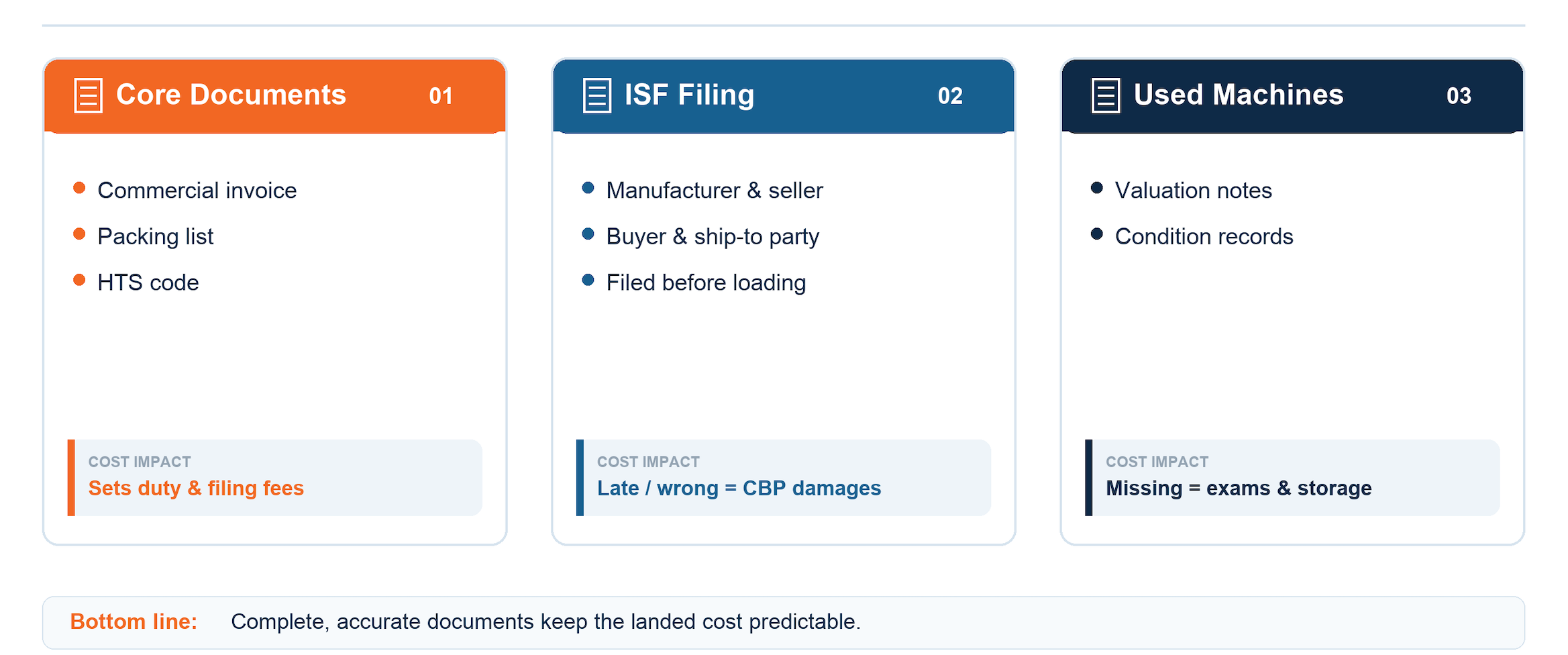
Paperwork shapes the final invoice as much as freight does. The commercial invoice, packing list, and HTS code set the duty and any filing fees.
ISF filing needs the manufacturer, seller, buyer, and ship-to party before loading. Late or inaccurate filings draw liquidated damages from CBP.
Used machines add valuation notes and condition records. Missing or wrong papers cause exams and storage charges at the port.
How do you control machinery shipping cost?
Send exact dimensions, gross weight, and clear photos before you ask for a rate. Understand the pricing method so small loads avoid minimum-charge surprises.
Compare the ocean freight cost benchmark to confirm your rate sits in the current market range. Ask for lashing and crane time in writing before booking.
One written quote that lists equipment, permits, lashing, and destination handling beats a low headline rate.
FAQ
Do machinery shipping costs include customs duties?
No. Standard port-to-port, CIF, or DAP quotes exclude US import duties and brokerage. Merchandise Processing Fees, Harbor Maintenance Fees, and ISF filing arrive as separate charges.
Under DDP, the seller or forwarder covers duties and clearance. Confirm the Incoterm and Importer of Record rules in writing before booking.
Does machinery require EPA or special US customs clearance?
Yes, if the machine contains a diesel, gas, or dual-fuel engine. Generators, excavators, and compressors all fit that group. Both new and used engine-powered equipment need valid US EPA compliance documents before entry.
New units need certification labels or a Certificate of Conformity. Used units often face tighter emissions review. Missing EPA forms or wrong HTS codes lead to CBP holds and storage fees.
Can US liftgate trucks unload heavy LCL machinery?
Only up to a point. Standard US liftgates stop near 2,000 to 2,500 lbs, or 900 to 1,130 kg. If your crated machine exceeds that weight or length, plan differently.
A facility without a dock or forklift needs a flatbed truck and rented lifting gear.
How are overweight machines handled on US roads?
Heavy or indivisible units move by flat rack or breakbulk to the port. They then transfer to flatbed, step-deck, or RGN lowboy trailers.
Federal and state axle limits cap standard container payloads near 17.2 to 19.9 metric tons. Overweight loads need state-by-state permits and route surveys.
All figures are estimates as of November 2026. Confirm rates, duties, and equipment limits in writing before you book. Written by the OOGSHIP Team.