
Key takeaways
- Shipping machinery overseas starts with one question: can the machine move on its own wheels?
- Self-propelled units often roll on and off. Oversize or static loads need flat rack, open top, or breakbulk.
- Packing, cleaning, and documents drive more claims than the ocean leg itself.
- Every destination checks biosecurity, wood packing, and valuation. Rules differ, so verify locally.
- Get a written scope that names the equipment, lashing, permits, and destination handling.
- For China to USA moves, see the dedicated route guide linked in this article.
Shipping machinery overseas looks complex because the cargo refuses to fit a neat category. For example, one buyer sends a lathe in a box. Meanwhile, another moves an excavator that drives itself onto a vessel. Both are machinery, yet they need very different plans.
This guide gives you a universal framework for shipping machinery overseas. It does not tie itself to one country or port. Instead, it walks from machine type to method, then to packing, papers, customs, and forwarder selection. Use it to ask better questions before you book. In short, it reflects how OOGSHIP plans complex moves.
What kind of machine are you actually shipping?
Start with how the machine moves, since that single fact decides most of the plan. Therefore, sort your load into one of three groups before you request any rate.
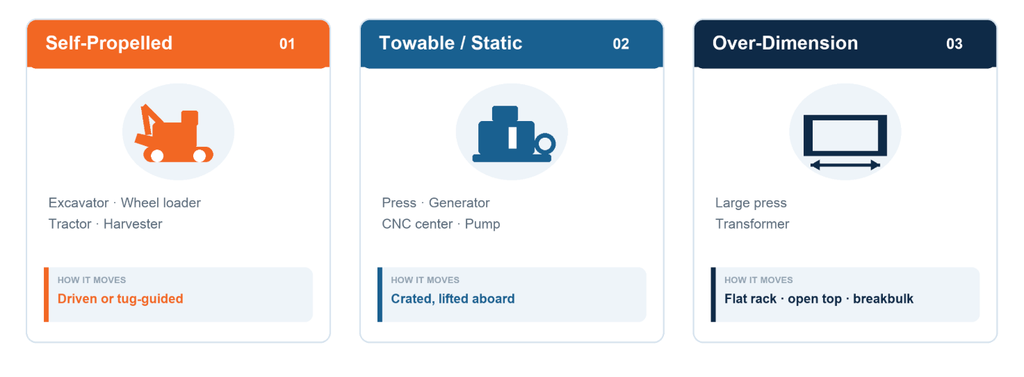
Self-propelled machines have their own drive. For instance, excavators, wheel loaders, tractors, trucks, and forest harvesters fit here. A driver or a tug guides them on and off the vessel.
Drive does not mean the machine boards alone. Tracked units such as excavators and dozers often need a terminal operator at the controls. Moreover, a machine with weak brakes or limited steering may need a tug instead.
Some lines inspect used self-propelled units before loading. They may check battery disconnection, fuel level, and cleanliness. In addition, clean off all soil and plant debris before the unit reaches the terminal.
Towable or static machines cannot drive. Presses, generators, CNC centers, and pumps need lifting gear. As a result, they travel crated on a container, flat rack, or open top.
Over-dimension loads break the size or weight envelope. A large press or transformer may be too wide, too tall, or too heavy for any box. Consequently, these units move on flat rack, open top, or as breakbulk cargo.
How do you match the machine to a shipping method?
Each machine group maps to a short list of methods. The table below is a starting point, not a final quote. In fact, dimensions and gross weight always decide the end result.
| Machine group | Usual method | Why it fits |
|---|---|---|
| Self-propelled | RoRo or flat rack | Drives or rolls aboard with little lifting |
| Static, standard size | 20ft or 40ft container | Lowest cost, best weather protection |
| Static, tall or wide | Open top or flat rack | Loaded from above or from the side |
| Indivisible heavy unit | Breakbulk or heavy lift | No container can hold the piece |
Cost and transit move across a wide band. A short sea move on a RoRo service may take days. In contrast, an intercontinental breakbulk booking can take weeks. Treat every number as a range until a carrier confirms space.
Three inputs drive most of that spread. First, the packed size sets the equipment type. Second, the weight decides whether road limits apply at either end. Finally, the port pair matters, since some lanes run more often than others.
Shipping machinery overseas rewards buyers who fix those inputs early. A stable plan avoids the rush fees that follow a late change. Furthermore, it gives the carrier time to place the right box.
For a head-to-head look at the three most common methods, read RoRo vs flat rack vs container. It keeps a single comparison angle.
What does a machinery booking cost and take?
Three cost buckets shape most quotes. They are the ocean leg, the equipment and special handling, and the origin and destination services. Meanwhile, the chart shows how those layers stack for a typical unit.
For out-of-gauge or heavy cargo, the extras matter. Special equipment surcharges, lashing, port lifting, and road permits can rival the base ocean rate. Thus, never compare a bare freight number across two methods.
Where a machinery shipping budget goes
Illustrative only. Special equipment and permits can exceed the base leg. Confirm all ranges in writing.
Transit and lead time vary widely by lane. A short-sea move can finish in days. However, intercontinental ocean freight plus inland trucking can take four to seven weeks or more.
Start packing, survey, and permit planning weeks ahead. Special containers and heavy lift slots are often tight. Above all, book early enough to keep your equipment choice open.
How should you pack and prepare a machine?
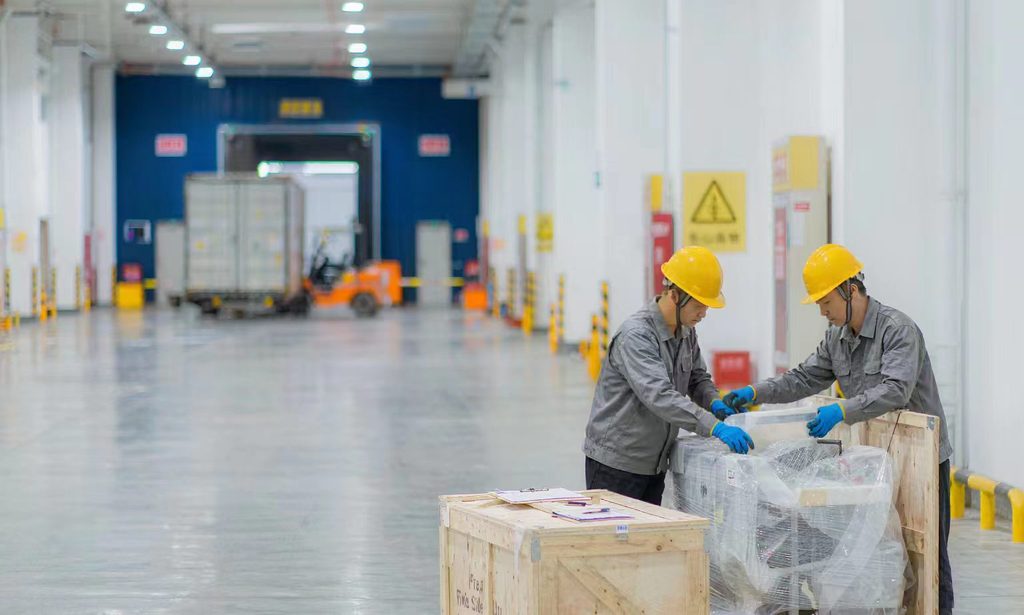
Packing failures cause more claims than rough weather. A machine that leaves clean, dry, and well secured usually arrives intact. So, follow the same core steps for every destination.
Clean the unit before it leaves the factory. Remove soil, seed, and plant matter from tracks and cavities. Otherwise, many countries reject dirty equipment at the border.
Fluid rules vary a lot by carrier and by method. Some RoRo lines cap fuel at a quarter tank or a fixed litre figure. Special container rules may also cover hydraulic oil, lubricants, and batteries.
Drain or secure fluids as the carrier and destination require. Fix moving parts so travel cannot bend an arm or spin a spindle. Still, confirm the exact rule before the machine reaches the terminal.
Control moisture with vapor barrier film and desiccant. Also, mark the center of gravity and the lift points on the outside of the crate. Our detailed export crating and preparation guide walks through each step.
Which documents travel with every machinery shipment?
Papers move with the machine or ahead of it. Missing files stop a shipment faster than a slow vessel. Therefore, prepare the core set early and keep copies with the crate.
| Document | What it proves | When to prepare |
|---|---|---|
| Commercial invoice | Value, seller, buyer, and cargo description | Before booking |
| Packing list | Contents, dimensions, gross and net weight, and package count | At packing |
| Bill of lading | Carrier receipt, transport contract, and title or release basis | Upon or after loading |
| Origin and compliance papers | Origin, ISPM-15 wood treatment, or entry compliance | Before sailing |
Describe the machine in plain, consistent words across every file. A mismatch between the invoice and the packing list invites an inspection. In addition, keep photos of the crate and the load before sealing.
What customs points apply in most destinations?
Every country asks the same three questions, even when the answers differ. What is the machine worth? Where did it come from? Does it meet local entry rules?
Wood packing often needs an approved treatment mark. Biosecurity teams may inspect for soil or pests. Engine-driven units can face extra emissions paperwork. Nonetheless, check each rule with the destination authority.
Rates and filing steps change by country, so this guide does not list them. For a worked example on one lane, see the China to USA heavy machinery guide. It treats that route in depth.
How do you choose the right forwarder?
A good forwarder thinks about the whole move, not just the sea leg. Ask questions that expose their real experience with machinery. In fact, the answers tell you more than a low price. Industry bodies such as FIATA publish a code of conduct that separates a serious partner from a reseller.
Start by asking who will lash the unit and who pays for permits. Next, find out how they handle a crate that misses the vessel. Finally, request a written scope that names each service and each exclusion.
Compare that scope across two or three providers. In general, the machinery shipping services page shows the range of options a specialist should be able to discuss.
What questions do shippers ask about machinery overseas?
Can any machine ship in a standard container?
No. Height, width, and gross weight set the limit. For example, a compact CNC may fit a 20ft box. A tall machining center can need a high cube, open top, or flat rack. Measure the packed unit, not the bare machine.
Is RoRo always cheaper than a container?
Not always. RoRo saves lifting on self-propelled units, but service frequency and route matter. On some lanes a container costs less and offers better protection. Compare both for your specific port pair.
What should I check before booking a self-propelled machine on RoRo?
Confirm whether the unit can drive safely under its own power or needs tug assistance. Also, check carrier rules on fuel levels and battery disconnection. Finally, clean off all soil or plant debris before arrival at the port.
Why is ISPM-15 wood treatment so important for machinery crates?
Custom machinery skids and crates often use solid wood. Many countries enforce ISPM-15 heat-treatment or fumigation rules with a visible stamp. As a result, untreated wood can trigger border holds, re-treatment, re-export, or fines.
What details should be locked in before paying a deposit?
Lock in packed dimensions, gross weight, center of gravity, and the container or vessel type. Fix lashing and lifting responsibility, permit coverage, free time, and quote validity in writing.
Written by the OOGSHIP Team. All cost and transit figures are illustrative ranges. Therefore, confirm equipment, rules, and prices in writing before you book.