

Key takeaways
- CNC machine shipping from China to USA rewards early planning, not the cheapest headline rate.
- Bolt the machine to a custom skid. Add shock mounts, VCI rust protection, and desiccant before packing.
- Mark the center of gravity and lift points on every crate for safe crane and forklift handling.
- Classify by function: HTS 8457 for machining centers, 8458 for lathes, 8459 for milling and drilling.
- China-origin CNC equipment usually carries a 25% Section 301 tariff on top of the MFN duty.
- File ISF at least 24 hours before loading. Photograph the crate before sealing for any insurance claim.
A CNC machine is a precision asset. A small shift in calibration can ruin a batch of parts on arrival. CNC machine shipping spans five stages: factory packing, export compliance, ocean transit, US clearance, and commissioning. The steps below focus on what protects accuracy and prevents costly delays.
Every year, OOGSHIP moves machining centers, turning centers, and grinding equipment across the Pacific. The same failure points appear again and again. This article turns that experience into a practical plan you can follow.
Why does CNC machine shipping from China to USA need special care?
A standard container handles most cargo. A CNC machine is different. It combines a heavy cast base, delicate linear ways, a precision spindle, and sensitive electronics in one frame. Road vibration, vessel motion, and crane lifts all act on that frame.
The goal is simple. Keep the machine level, dry, and secure from the factory floor to your US workshop. A machine that arrives clean but out of calibration still costs money. Budget time for packing and planning before you book space.
Start with the machinery shipping options to understand which service fits your equipment. Then work backward from the delivery date to set a packing schedule.
How do you prepare a CNC machine for ocean shipping?
Preparation happens in three parts: securing the machine, protecting exposed surfaces, and packing loose components. Treat each part as a separate checklist item. Skip one and the whole shipment is at risk.
Leveling and shockproofing in the crate
Bolt the machine to a heavy steel skid or base. Shock-absorbing mounts sit between the machine and the skid. They stop road vibration and vessel motion from reaching the linear ways and ballscrews.
Sensitive assemblies need extra attention. Brace or pack the spindle, control panel, and overhanging arms separately when needed. Professional crating builds the skid around the machine’s actual anchor points. It never forces a generic box around the equipment.
How do you prevent rust and moisture damage?
Ocean crossings are humid. A container can hold condensation for weeks. Bare steel rails, ballscrews, and circuit boards can corrode before the ship docks. This is one of the most common CNC shipping failures.
Use vapor corrosion inhibitor film, often called VCI, on exposed machined surfaces. Seal the spindle taper and way surfaces with VCI paper or plastic. Add desiccant bags inside the crate and the controller case. Calculate the desiccant quantity from the crate volume and expected transit time.
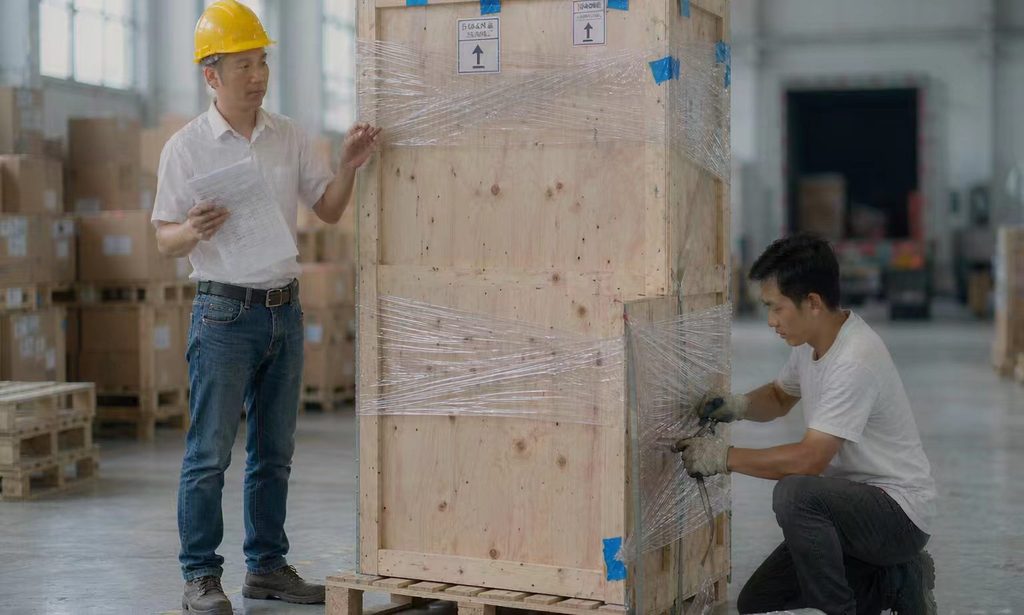
Mark the center of gravity and every lift or fork point on the outside of the crate. Crane crews and forklift drivers read those marks, not the packing list. Clear marks reduce the risk of a dropped or tilted load.
Coding, controllers, and accessory packing
Controllers, probes, tooling, and spare parts travel in a separate padded case. The machine weight must never crush them. Label every cable and manual, then inventory each item against a packed parts list.
A missing encoder cable can delay commissioning by weeks. Keep one copy of the parts list inside the crate and another with the shipping documents. The US team should check both lists before the crew opens the container.
Which HTS code applies to your CNC machine?
Classification drives the duty rate and any license requirement. CNC machines sit in Chapter 84 of the Harmonized Tariff Schedule. The exact heading depends on what the machine does and how it cuts metal.
| Machine type | Typical HTS heading | Key test |
|---|---|---|
| Machining center with automatic tool changer | 8457.10 | Tool magazine runs multiple operations without an operator |
| CNC lathe or turning center | 8458 | Workpiece rotates while the tool removes metal |
| CNC milling or drilling machine | 8459 | Tool rotates; no full machining center function |
Confirm the code on the official Harmonized Tariff Schedule before departure. Match the code to the commercial invoice description exactly. A mismatch can trigger an exam or a reclassification that changes your landed cost after arrival.
Duty is only one line in the stack. The chart below shows the typical China-origin tariff layers for a machining center.
Typical duty stack, China-origin CNC machining center, 2026
Sources: USITC HTS Revision 2026 and U.S. Note 20(b), Section 301 List 1. Verify rates and any additional measures at booking.
New versus used machine rules
A new CNC follows standard machinery entry. A used unit needs extra documentation and may face equipment restrictions. Value, condition notes, and environmental checks all add work. Confirm which path applies before you pay the supplier.
The used machinery import steps cover valuation and compliance in detail. Older machines sometimes need modification to meet US safety standards. Check that early, not at the port.
What does ISF filing require?
The Importer Security Filing, or ISF 10+2, is mandatory for ocean cargo. CBP requires the importer’s ten data elements at least 24 hours before loading at the foreign port. The carrier supplies two more. Late or inaccurate filings can draw liquidated damages.
Give your broker the HTS code, manufacturer, seller, buyer, and ship-to party well before the cut-off. The two carrier elements arrive later. Build the filing into your booking timeline so the container is not rolled.
Which container and lashing plan fits your machine?
Many CNC machines ship inside a standard container on a custom skid. But door clearance and gross weight change the answer. Taller, wider, or heavier units may need a 40-foot high cube, an open top, or a flat rack.
| Option | Best for | Watch point |
|---|---|---|
| 20GP | Compact machines within door height | Inland road weight limits |
| 40HQ | Tall vertical machining centers | Extra height, same floor load |
| Open top | Over-height units loaded by crane | Weatherproof tarp needed |
| Flat rack | Over-width or very heavy units | Lashing and route survey |
Rated lashing points and blocking secure the skid. Bracing keeps the center of gravity stable through ocean swells and crane lifts. Always check equipment dimensions and gross weight against container and inland road limits before booking.
Review the container options early in the planning stage. A 20GP is not automatically cheaper once road permits and axle limits enter the quote.

Do you need marine insurance for a CNC machine?
Yes. Carrier liability is far below the value of a precision machine. All-risk marine insurance covers physical damage from handling, weather, and accidents during the voyage. It is one of the highest-value lines in a machinery quote.
Declare the full invoice value. List every removed component, such as the controller or probe. Photograph the skid, lashing, VCI wrapping, and crate before sealing. Those images are your evidence if a surveyor reviews a claim.
Check whether the policy covers the inland leg to your facility. Many claims happen after the container leaves the port, not at sea. Ask for the deductible and the survey process in writing.
What happens at US clearance and delivery?
A CNC import needs a clean commercial invoice, packing list, HTS code, ISF filing, and any machinery-specific documents. The U.S. Customs and Border Protection import process governs entry. A broker files the entry and pays duty on your behalf.
Physical inspection is possible. Keep the packing list and classification notes ready for the broker. A clear description of the machine and its condition speeds up any review.
Plan the final mile before the vessel sails. Heavy machines need a flatbed or lowboy, a verified route, and often an oversize permit. Confirm that the unloading site has a forklift or crane rated for the crate weight.
How do you commission the machine after arrival?
Commissioning starts before unpacking. Confirm the foundation, power supply, and air or coolant connections. Reserve a technician and align that date with the delivery appointment.
Unpack against the parts list. Check the spindle, controller, and tooling first. Remove VCI film and desiccant only when you are ready to install. Store the packing materials until the machine passes its first test cut.
A machine that arrives safely but sits idle for weeks still costs money. Coordinate delivery, rigging, and the technician in one schedule. That is the difference between a shipment and a working production asset.
FAQ
Do I need moisture and rust protection for a CNC machine?
Yes. Use VCI film or paper on exposed machined surfaces and desiccant inside the crate. Ocean humidity can corrode rails, ballscrews, and circuit boards during a long transit. The cost is small compared with a refinishing bill.
How do I choose between a standard container, open top, and flat rack?
Start with packed height and width. If the machine fits a standard door and stays within road weight limits, use a 20GP or 40HQ. Over-height loads need an open top. Over-width or very heavy units need a flat rack and a route survey.
What causes customs delays on CNC machine imports?
The usual causes are a mismatch between the HTS code and the invoice description. Missing documents, a late ISF, or incomplete used-machine paperwork add more delay. Confirm classification early and give your broker every file before loading.
What should be ready at the US facility before delivery?
Arrange a forklift or crane rated for the crate weight. Prepare a level foundation, the correct power supply, and a technician on site. Keep the packing list and parts case ready so the team can check every item on arrival.
Written by the OOGSHIP Team. All figures are estimates. Confirm duties, rates, and equipment limits in writing before you book.