
Key takeaways
- Tracking is a chain of handoffs, not one live location pin.
- Each node has a single owner: forwarder, carrier, terminal, CBP or broker, and delivery agent.
- Ocean transit runs 14–18 days to the US West Coast, about 32–38 to the East Coast (Nov 2026).
- An exception is any missed node. Fix it with the owner of that node, using the booking reference.
- Flat rack, open top and breakbulk track by booking and B/L too. Lifting and permits add nodes.
- An OMS/TMS layer pulls carrier, terminal and CBP data into one timeline with slip alerts.
A tracking page is only useful if you can read it. This guide explains each node, names the owner, and shows what to do when a milestone slips.
The shipment lifecycle you can track
Cargo moves from the factory to your door through a chain of handoffs. Tracking reads the status at each handoff.
The process overview explains each step before sailing. Tracking takes over from there and follows every milestone to delivery.
Key tracking nodes
The table below lists the nodes most shipments pass through. It shows the status you see and who owns each step.
Reading the timeline end to end beats checking one event in isolation. Some loads add a transshipment or a delivery appointment.
| Node | What you see | Owner |
|---|---|---|
| Booking confirmed | Booking number and sailing window | Forwarder |
| Cargo received at warehouse | Receipt into Guangzhou or Shenzhen hub | Forwarder |
| Loaded at origin port | Container sealed and vessel loaded | Terminal |
| Vessel departed | Departure and estimated arrival (ETD/ETA) | Carrier |
| Transshipment (if any) | Port transfer and onward vessel | Carrier |
| Arrived at destination port | Discharge and available for clearance | Terminal |
| Customs clearance | Release or exam status (e.g., Hold/Released) | CBP or Broker |
| Out for delivery | Truck or rail dispatched to door | Delivery Agent |
Typical timeline by lane
Timing depends on the coast you use. The chart below shows current November 2026 benchmarks from published schedules and forwarder planning figures.
China to USA transit, November 2026 (days)
Sources: carrier schedule indications and forwarder door-delivery planning, November 2026. Treat each figure as a planning estimate, not a promise.
Ocean time is only part of the timeline. Add origin handling, customs and inland trucking before you promise a delivery date.
Exception types and what they mean
Not every milestone lands on time. Common exceptions include a missed cut-off, a vessel delay, a transshipment hold, a customs exam, and a delivery appointment slip.
The exception type tells you who acts. The carrier owns the sailing. The broker owns clearance. The delivery agent owns the final mile.
| Exception | Owner | First action |
|---|---|---|
| Missed origin cut-off | Forwarder | Book the next sailing |
| Vessel delay or roll | Carrier | Confirm the revised ETA |
| Transshipment hold | Carrier | Check the onward vessel |
| Customs exam | Broker or CBP | Send requested documents |
| Delivery slip | Delivery agent | Reserve a new appointment |
The heavy machinery shipping guide shows how exceptions differ for special cargo.
How OMS and TMS tracking works
Tracking several shipments at once creates blind spots. The risk grows when standard boxes and out-of-gauge (OOG) machinery move together.
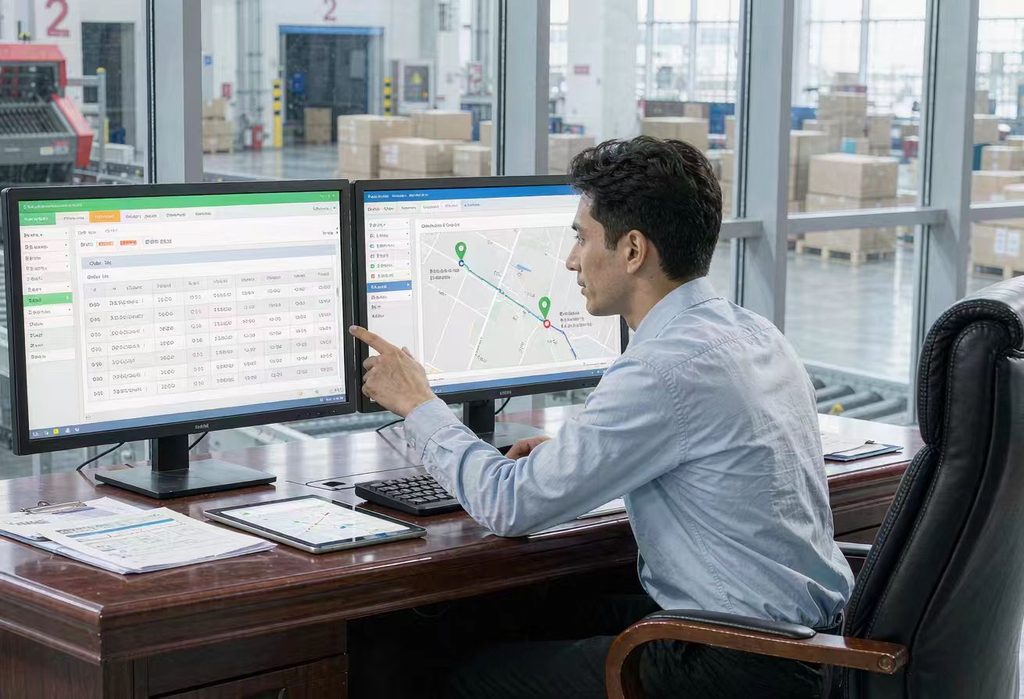
Checking three carrier portals leaves gaps. OOGSHIP runs a proprietary OMS (order management) and TMS (transport management) layer.
It pulls carrier, terminal, and CBP data into a single timeline. The view matches the container options you booked.
You get automated alerts the moment a node slips. That lets you act before demurrage or detention charges run up.
What to do when a milestone slips
When a milestone slips, confirm the exception type first. Contact the right owner with the booking reference.
A missed cut-off may need a rollover. A customs exam needs documents ready. Acting early protects the delivery window.
Early action also limits extra charges. Your coast routing affects recovery time. Some ports clear congestion faster.
The 2026 shipping outlook explains the wider pattern behind these delays.
Frequently asked questions
What does a tracking status actually tell me?
A status shows the current node, such as loaded, departed, arrived, or out for delivery. It also shows the next expected step.
Tracking does not predict delays perfectly. Read an exception as a signal to act, not as a final answer on timing.
How often does tracking update?
Updates follow each handoff. A typical shipment shows a new status at booking, loading, departure, arrival, clearance, and delivery.
Carrier and terminal systems feed the data. Gaps appear when a node has no event. An OMS/TMS layer consolidates these feeds into one timeline.
What is an exception in tracking?
An exception is a milestone that misses its window or needs action. Examples include a cut-off miss, vessel delay, customs exam, or delivery slip.
Each points to a specific owner. The exception type tells you whom to contact and what to prepare.
Can I track out-of-gauge cargo the same way?
Yes. Flat rack, open top, and breakbulk pieces carry a booking and bill of lading reference. Milestones update as the load moves.
Special cargo may add lift or permit steps, but the tracking logic stays the same. The LCL vs FCL machinery guide notes where OOG bookings differ.
Who fixes a delayed shipment?
The owner of the delayed node fixes it. The carrier owns sailing delays. The customs broker owns clearance holds.
The delivery agent owns the final mile. Your forwarder coordinates across them and keeps you posted.
Does tracking show customs clearance?
It shows the clearance milestone, such as pending, exam, or released, once the carrier or broker updates it.
Commercial tools often mirror CBP exam and release statuses through EDI. The underlying filing sits with U.S. Customs and Border Protection.
Tracking reflects that status but is not the filing system itself. Confirm details with your broker.
Written by the OOGSHIP Team.